
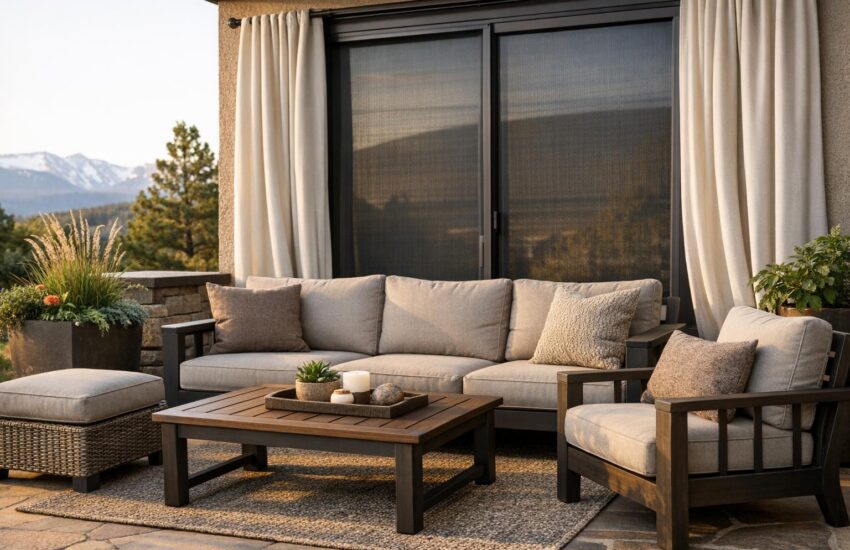
Weather-resistant cushions and patio treatments that look tailored—not temporary
Summer in Colorado is patio season—but our combination of high-altitude UV, big temperature swings, wind, and sudden storms can be rough on textiles. The right outdoor fabrics, cushion construction, and patio treatments can keep your space comfortable and polished for years, not just one season. Below is a practical guide for homeowners and designers who want performance without sacrificing style—plus what to look for when specifying weather-resistant cushions and sliding door coverings.
What “durable outdoor fabric” really means (and what it doesn’t)
Outdoor fabric durability isn’t only about thickness. It’s about how the fiber is colored, how it handles UV exposure, how quickly it dries, and whether the cushion build lets water escape. Premium outdoor textiles are often solution-dyed, meaning the color is integrated into the fiber—not just applied to the surface—so fading is significantly reduced compared to many piece-dyed options.
Also important: “mildew-resistant” doesn’t mean “mildew-proof.” Even high-performance fabrics resist mildew growth, but dirt, pollen, sunscreen, and leaf debris can hold moisture and create conditions for mildew if cushions aren’t periodically cleaned and allowed to fully dry.
Choosing the best outdoor fabrics for cushions: acrylic vs olefin vs polyester
For seating and lounge cushions, most specs fall into three common categories. Each can be a great choice—if it’s used in the right application and built correctly.
| Fabric Type | Best For | Strengths | Considerations |
|---|---|---|---|
| Solution-dyed acrylic | Full-sun patios, high-UV exposures, long-term color goals | Excellent UV/fade resistance; strong mildew resistance; soft “indoor-like” hand | Needs regular rinsing/cleaning to avoid embedded soil; build quality matters as much as fabric |
| Olefin (polypropylene) | High-traffic family patios; value-focused performance | Great colorfastness; resists stains/chemicals well; dries quickly | Hand/texture varies by weave; verify UV ratings and whether it’s solution-dyed |
| Performance polyester | Covered patios, screened rooms, moderate UV | Wide style range; can perform well with the right construction/finishes | Some versions rely on coatings that can wear; specify solution-dyed when possible for better fade resistance |
Designer tip: If your patio gets intense afternoon sun, prioritize solution-dyed goods first. Pattern and texture still matter, but fiber/color technology is what keeps a “new cushion look” from becoming a “sun-bleached cushion look.”
Weather-resistant cushions: the fabric is only half the story
A common patio frustration is buying great-looking cushions—then realizing they stay damp, smell musty, or lose shape quickly. That’s usually a cushion build issue:
1) Choose quick-drying foam for real outdoor exposure
If cushions will be left out through pop-up storms or sprinkler overspray, look for reticulated “dry fast” foam (an open-cell structure designed to let water pass through). It’s a smart upgrade for patios, pool areas, and rooftop decks where moisture happens—even in Colorado’s drier climate.
2) Add drainage and airflow details
Small workroom choices make a big difference: breathable wraps, venting (when appropriate), and construction that avoids “sealed pockets” where water sits. Your cushions should be able to dry from the inside out, not just on the surface.
3) Specify outdoor thread and closures
Ask for UV-stable thread intended for exterior use and quality zippers/closures that won’t corrode. These “small parts” are often the first failure point on lower-quality patio cushions.
Patio treatments for sliding doors: comfort, glare control, and an intentional look
Sliding doors and large glass openings are a summer blessing—and a glare/heat challenge. The best patio treatments balance daytime visibility with light control, privacy, and easy operation.
A practical pairing: solar shades + drapery panels
For many Colorado homes, solar shades handle daytime UV and glare while keeping the room bright. Layering with decorative drapery adds softness, evening privacy, and a finished architectural line—especially helpful in open-concept spaces where the patio door is visually central.
Don’t skip hardware (it affects operation every day)
Wide openings need stable, smooth-gliding hardware that can handle frequent use. If you’re layering treatments, plan the stack-back and clearances so doors function without fabric interference.
Step-by-step: a smart summer-ready patio plan
Step 1: Map sun and moisture
Note where sun hits at 9am, noon, and late afternoon. Identify splash zones (sprinklers, hot tubs, pool edges), and wind exposure. This tells you where you need maximum UV stability and where quick-dry cushion construction matters most.
Step 2: Pick fabric by “use zone,” not by color alone
Use higher-performing outdoor fabrics for full-sun seating and “family zones” (food, pets, kids). Reserve softer, decorative textures for covered areas where they’ll be protected. If you love a light color, it can be stunning outdoors—just plan for more frequent cleaning.
Step 3: Upgrade the cushion insert (if you want “weather-resistant” to be real)
For uncovered seating, choose inserts designed for outdoor drainage and resilience. This helps cushions dry faster after storms, keep their shape, and stay fresher during peak season.
Step 4: Add a door treatment that reduces glare inside
If your patio is bright, interior glare often increases right when you want the doors open. Solar shades or tailored vertical solutions can reduce eye strain, protect interiors from UV, and make the whole indoor-outdoor connection feel calmer.
Step 5: Plan for maintenance (simple, realistic routines)
A quick rinse to remove dust/pollen, prompt cleanup of sunscreen or food spills, and letting cushions dry fully after rain will extend the life of even premium textiles. For prolonged bad weather or weeks away from home, storing cushions or using breathable covers helps prevent trapped moisture.
Colorado-specific note: high-altitude sun changes the equation
Along the Front Range and throughout Colorado, the sunlight can feel noticeably more intense—especially in summer afternoons. That’s why “indoor-looking” textiles that claim to be “outdoor-friendly” often disappoint here. If your patio gets direct sun, prioritize:
• Solution-dyed performance fabrics for better fade resistance
• Quick-dry cushion construction for sudden thunderstorms
• Solar shading at large glass doors to reduce glare and interior heat gain
If you’re designing across multiple properties (mountain vs metro), it’s worth specifying by exposure zone rather than repeating the same fabric everywhere.
Ready for custom weather-resistant cushions or patio door treatments?
Woven Window has been fabricating and installing custom solutions across Colorado since 1999—helping homeowners and design professionals choose outdoor fabrics, cushion builds, and patio treatments that match the way you actually live.
Prefer a guided start? Learn more about our team and process.
Schedule a consultation
Get expert guidance on outdoor fabrics, patio cushions, and sliding door coverings.
Get expert guidance on outdoor fabrics, patio cushions, and sliding door coverings.
FAQ: Outdoor fabrics, patio treatments, and weather-resistant cushions
What’s the best fabric for outdoor cushions in full Colorado sun?
Look for solution-dyed outdoor fabrics designed for upholstery. They tend to hold color better in strong UV conditions and are engineered to resist moisture-related issues. Pair the fabric with quick-dry cushion construction for best results.
Are “weather-resistant cushions” the same as waterproof cushions?
Not exactly. Weather-resistant cushions are built to handle sun and occasional moisture, then dry out well. “Waterproof” often implies sealed construction—which can trap moisture inside if water gets in from seams or zippers. For patios, quick-dry is usually more comfortable and practical than fully sealed.
How do I keep outdoor cushions from getting mildew?
Keep them clean (dirt holds moisture), let them dry fully after rain, and avoid storing damp cushions in bins or tightly covered piles. Breathable covers and occasional rinsing go a long way.
What are the best patio treatments for sliding glass doors?
For many homes, solar shades are a clean solution for daytime glare and UV. If you want softness and better evening privacy, layer with drapery. The best choice depends on door traffic, stack-back space, and whether you want a minimal or more decorative look.
Can I match indoor and outdoor fabrics for a seamless indoor-outdoor look?
Yes—many performance outdoor textiles are designed to feel “indoor” while still standing up to sun and moisture. The key is selecting the right fiber type and specifying cushion construction that fits your exposure.
Should I replace my patio cushions or reupholster them?
If the frames are solid and you like the scale, reupholstery can be a smart move—especially when you upgrade the inserts and choose higher-performing outdoor fabrics. If the foam is breaking down or never fit correctly, rebuilding to the right dimensions can make the furniture feel new again.
Glossary
Solution-dyed
A coloring method where pigment is added during fiber creation, helping fabric resist fading because the color runs through the entire fiber rather than sitting on the surface.
Olefin (polypropylene)
A synthetic fiber commonly used in performance outdoor fabrics due to its stain resistance and strong colorfastness, especially when solution-dyed.
Reticulated (Dry Fast) foam
Open-cell foam engineered to let water drain through quickly, improving dry time and reducing the chance of trapped moisture inside outdoor cushions.
Solar shade
A shade designed to reduce glare and UV while preserving some outward view, often used on large windows and sliding glass doors for daytime comfort.
