
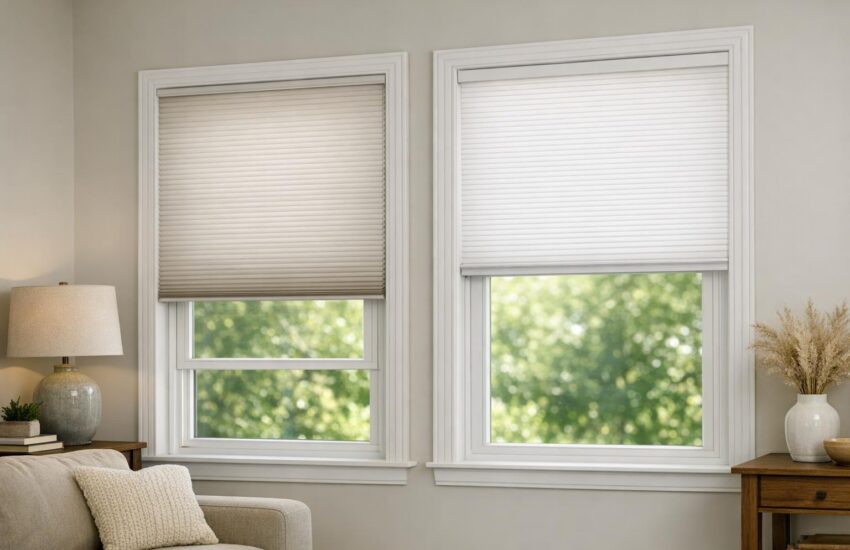
Insulating shades that look clean, feel comfortable, and work hard in Colorado’s changing seasons
Cellular shades (also called honeycomb shades) are one of the most effective energy saving window treatments you can add without remodeling. They’re designed with a built-in air layer that helps reduce drafts and temperature swings—so your rooms feel more even, your HVAC runs less, and your windows look tailored instead of “covered up.” For Denver-area homes that see bright sun, cold snaps, and shoulder-season temperature whiplash, that combination is hard to beat.
Why windows are the “energy weak spot” (and why shades matter)
Even a well-insulated home can lose comfort at the glass. The U.S. Department of Energy notes that heat gain and heat loss through windows account for roughly 25%–30% of residential heating and cooling energy use. That’s not just an efficiency issue—it’s why some rooms run hot in the afternoon, why you feel chilled near a window at night, and why thermostats get “confused” by sunny spaces.
Cellular shades help because they add an interior thermal buffer right where the problem is: at the window opening.
How cellular shades trap air (simple explanation)
A cellular shade is made from fabric formed into “cells” (pockets) that look like a honeycomb from the side. When the shade is lowered, those cells hold layers of still air. Still air is a natural insulator—so the shade slows down heat transfer between your room and the window glass.
Think of it as adding a comfortable “air jacket” over the window. It’s not a replacement for good windows, but it can make a noticeable difference—especially when your shades fit well and you use them consistently.
Comfort note: The Department of Energy highlights that tightly installed cellular shades can reduce heat loss through windows by 40% or more during heating season—often translating into about 10% heating energy savings depending on the home and usage.
Top benefits of cellular shades (beyond energy savings)
1) Real insulation where you feel it most
If you’ve ever avoided a chair near a window in winter, you already understand the value of insulating shades. Cellular shades can help reduce that “cold radiating off the glass” feeling, especially at night when temperatures drop quickly along the Front Range.
2) Better light control (without a heavy look)
Cellular shades come in sheer, light-filtering, and blackout options. In bedrooms, blackout fabrics can support better sleep. In living spaces, light-filtering fabrics soften glare while keeping rooms bright—useful in Colorado’s high-elevation sunshine.
3) Privacy with a clean, tailored profile
Want privacy without sacrificing a minimalist look? Cellular shades sit close to the window and stack neatly when raised. Many homeowners and designers use them as a “base layer” and add drapery for softness and architectural finish.
4) Quieter rooms (a hidden perk)
The same cellular structure that traps air can also help “soften” sound. While results vary by window type and street noise levels, many people notice a calmer feel—especially in bedrooms, home offices, and nurseries.
5) Safer, easier daily living with modern lift options
Cordless lift and motorization can make shades easier for kids, pets, and anyone who wants quick, consistent day/night routines. Consistent use is a big part of seeing energy results—because the best shade only helps when it’s actually down at the right times.
Choosing the right cellular shade: a quick comparison
| Option | Best for | What to know |
|---|---|---|
| Single-cell | Budget-friendly insulation + a slimmer stack | Great starter choice for many homes; still a meaningful upgrade over bare glass. |
| Double-cell | Maximum comfort for cold/hot exposures | More air layers typically means better insulation; ideal for bedrooms and north/west windows. |
| Light-filtering | Living rooms, kitchens, offices | Softens glare while maintaining a bright feel. |
| Blackout | Bedrooms, media rooms, shift-work sleepers | Reduces light strongly; pair with a tight fit to minimize edge light gaps. |
Tip: “Energy efficiency” is not just fabric choice—fit matters. A shade that’s carefully measured and installed closer to the opening typically performs better than one with large gaps around the edges.
How to use cellular shades for maximum energy savings (step-by-step)
Step 1: Identify your “problem windows”
Walk the home at three times: early morning, late afternoon, and after dark. Note which windows feel drafty, glare-heavy, or noticeably colder. Those are prime candidates for insulating shades.
Step 2: Match opacity to the room’s purpose
Use light-filtering where you want daylight without harsh glare, and blackout where sleep or screen viewing matters most. If privacy is the priority, focus on fabrics that obscure sightlines while still letting in soft light.
Step 3: Plan your daily “shade schedule”
In winter, lower shades in the evening to keep warmth in, and open them on sunny windows during the day to capture free solar heat. In summer, do the opposite on hot exposures: lower them during peak sun to reduce heat gain.
Step 4: Get the fit right (measurement + install)
Cellular shades deliver the best results when they’re sized to the window and installed precisely—especially for inside-mount applications. Professional measuring and installation can help avoid gaps, ensure smooth operation, and give the finished look designers expect.
Did you know? Quick facts worth remembering
Windows are a major energy driver: Heat gain/loss through windows can account for about 25%–30% of home heating and cooling energy use.
Cellular shades are highlighted for savings: The U.S. Department of Energy specifically calls out insulated cellular shades as a strong choice when you want significant energy savings from window coverings.
ENERGY STAR note: ENERGY STAR does not currently certify blinds/curtains/shades (window attachments), so performance is best evaluated by fit, fabric design, and reputable testing/rating resources.
Colorado angle: why cellular shades make sense here
Colorado homes deal with a unique combo: intense sun (even in winter), big day-to-night temperature drops, and seasonal wind that can make older windows feel drafty. That’s exactly where cellular shades shine.
For Denver and the surrounding Front Range, many homeowners prioritize:
• Better nighttime insulation in winter (bedrooms and north-facing rooms)
• Glare control for west-facing windows during late-afternoon sun
• A clean, layered look that pairs well with drapery and Roman shades
If you like a softer, more decorative finish, cellular shades can also be layered with custom drapery for added insulation and style.
Ready for a more comfortable home (and a cleaner-looking window)?
Woven Window has been serving Colorado since 1999 with expert design guidance, custom fabrication, and professional installation. If you’re comparing insulating shades for a few key rooms—or planning a whole-home upgrade—our team can help you choose the right cell style, opacity, and operating system for the way you live.
FAQ: Cellular shades & energy savings
Do cellular shades really lower energy bills?
They can. Energy results depend on your window type, shade fit, and how consistently you use them. The biggest benefits usually show up in rooms with noticeable drafts, large glass areas, or strong sun exposure.
Are double-cell shades always worth it?
Not always—but they’re a smart upgrade for comfort-sensitive rooms (bedrooms, nurseries, offices) or windows that run cold/hot. A design consult can help you decide where single-cell is plenty and where double-cell will be noticeable.
Will I still need drapes if I choose cellular shades?
Many homes use cellular shades alone for a crisp, modern look. Drapes are optional if you want more softness, stronger room-darkening, or a layered designer finish.
What’s the difference between inside-mount and outside-mount for insulation?
Inside-mount looks streamlined and can perform well when measured carefully. Outside-mount can cover more of the window trim and may help reduce edge gaps. The best choice depends on window depth, trim style, and how you want the room to look.
Are cellular shades easy to maintain?
Yes. Routine dusting with a microfiber cloth, gentle vacuuming with a brush attachment, or light compressed air for the cells typically keeps them looking fresh. Your installer can also recommend care based on fabric selection and room conditions.
Glossary (helpful terms)
Cellular (Honeycomb) Shade
A fabric shade formed into air pockets (“cells”) that help insulate a window opening.
Single-Cell / Double-Cell
Refers to the number of air-pocket layers in the shade. More cells typically means more insulating potential.
R-Value
A measure of resistance to heat flow (insulating ability). In window treatments, it’s best used as a comparison between products rather than a promise that it replaces wall or attic insulation.
Inside Mount / Outside Mount
Inside mount installs within the window frame for a tailored look; outside mount installs over the trim to cover more area and can help reduce light gaps.
