
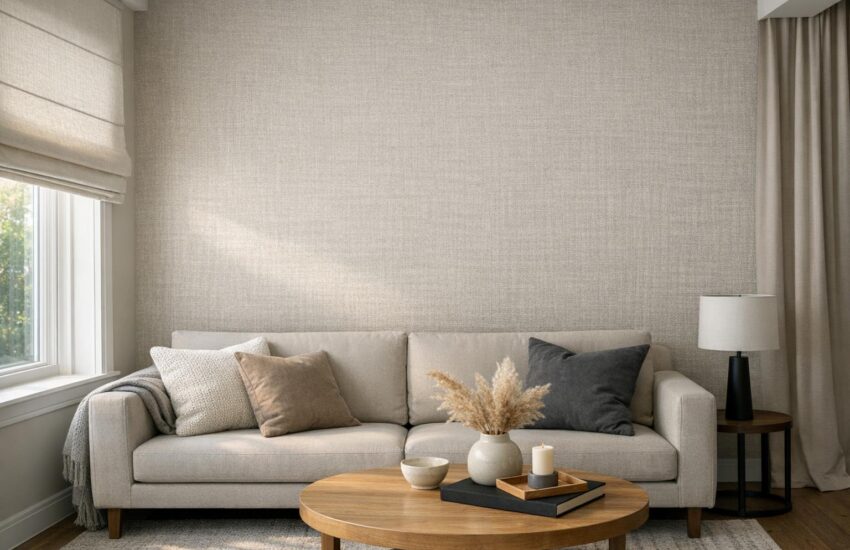
Create a focal wall that feels custom—without remodeling the whole room
An accent-wall wallpaper can change the “architecture” of a space in an afternoon: it adds depth, texture, pattern, and a designed-on-purpose finish that paint alone often can’t match. Whether you want a quiet linen-like backdrop behind a sofa or a bold scenic mural in a dining room, the key is choosing the right focal wall designs and then installing them with clean seams, crisp corners, and confident pattern alignment. At Woven Window, we help Colorado homeowners and interior designers select statement wallpapers and pair them with complementary window treatments—so the entire room reads as one polished plan.
1) Choosing the right wall: the “focal wall” checklist
Not every wall deserves the spotlight. A great accent wall wallpaper placement feels intentional—like the room was built around it. Use this quick checklist before you fall in love with a pattern:
A focal wall is usually the one that…
Frames a “moment”: a headboard wall, fireplace wall, built-in shelving, or the wall behind a primary seating area.
Has fewer interruptions: fewer doors/odd cutouts means cleaner repeats and less waste.
Is seen first: the wall you naturally face when entering the room often delivers the biggest impact.
Works with lighting: strong side light can emphasize texture (grasscloth look, linen, embossing), while direct glare can fight high-shine finishes.
If you’re debating between two walls, choose the one that gives the wallpaper the most uninterrupted real estate. It’s the difference between a “wow” feature and a busy background.
2) What’s trending in 2026: texture, nature, and larger-scale pattern
Wallpaper trends keep shifting toward “materiality”—walls that look like they have depth, fiber, or a hand-touched surface. If you want an accent wall that still feels current a few years from now, prioritize one of these directions:
Tactile neutrals: linen looks, woven textures, plaster-like visuals—great for living rooms and bedrooms.
Biophilic pattern: botanicals, canopies, organic shapes—especially effective in entryways and powder rooms.
Scenic murals: landscapes and panoramic prints that make a room feel “finished,” even with minimal decor.
Bigger repeats: oversized florals/geometrics read more modern than tiny, busy prints.
Design tip: if your room already has a lot of movement (veined stone, busy rugs, bold upholstery), choose wallpaper with either strong color or strong pattern—rarely both. That keeps the accent wall elevated instead of overwhelming.
3) Wallpaper types that work best for focal wall designs
The best choice depends on your wall condition, timeline, and how “permanent” you want the change to be.
| Wallpaper type | Best for | Watch-outs |
|---|---|---|
| Non-woven (paste-the-wall) | Crisp seams, easier handling, popular for modern patterns and murals | Needs proper priming/smoothing; sloppy paste application can cause bubbles |
| Pre-pasted | DIY-friendly if walls are in great shape | Activation timing matters; edges can lift if surface prep is rushed |
| Peel-and-stick (removable) | Short-term refreshes, kids’ rooms, rentals, quick experiments | Less forgiving on textured walls; can struggle in humidity/heat; seams show more if wall isn’t perfectly smooth |
| Vinyl / scrubbable | High-traffic zones, mudrooms, some commercial applications | Heavier material may require experienced handling for corners and around outlets |
If your goal is a long-lasting designer finish, professional wallpaper installation often pays off in the details: pattern matching, clean baseboard cuts, and smooth transitions at ceilings and corners.
4) Installation details that make or break an accent wall
Most “bad wallpaper” isn’t the paper—it’s prep. Here’s the pro-style sequence that leads to crisp results:
Step 1: Surface prep. Walls should be clean, dry, sound, and smooth. Patch nail holes, sand ridges, and address any peeling paint before paper touches the wall.
Step 2: Prime for wallpaper. A proper primer helps with adhesion and improves removability later. It also prevents “flashing” where paste absorbs unevenly.
Step 3: Plan your layout. Measure wall width, confirm roll coverage, and decide where seams will fall. Centering a big motif behind a bed or sofa can look more intentional than starting in a corner.
Step 4: Start plumb. Use a level line so your first panel is perfectly vertical. A slightly crooked first panel compounds into visible drift by panel 3 or 4.
Step 5: Protect the details. Turn off power and remove outlet covers for cleaner cuts. Use fresh blades for crisp trims at baseboards and ceilings.
Step 6: Clean as you go. Wipe paste gently from the face of the paper (especially near seams) to avoid sheen changes or residue.
Corner note: wallpaper rarely wraps a corner perfectly in older homes (walls can be out-of-square). A professional installer knows when to “break” a seam in a less noticeable spot to keep the pattern reading straight.
5) Pairing wallpaper with window treatments (so the room feels cohesive)
Accent-wall wallpaper is a statement—your window treatments should support it, not compete with it. A few reliable pairings:
Bold wallpaper + tailored shades: Roman shades in a solid, textured fabric keep the focus on the wall while still feeling custom.
Textured neutral wallpaper + drapery: Drapes can echo the wall’s warmth and add softness—especially in living rooms with hard surfaces.
Scenic mural + minimal hardware: Sleek rods, clean-lined finishes, and simplified silhouettes avoid visual clutter.
Geometric wallpaper + natural materials: Woven wood shades balance a crisp pattern with organic texture.
If you’d like a unified plan, Woven Window can coordinate the wallpaper selection with fabrics, trims, and hardware finishes so your focal wall and windows read as one design story.
Helpful related pages:
6) Quick “Did you know?” facts that help you plan
A crisp first panel matters. Starting perfectly plumb prevents pattern drift across the wall.
Lighting changes everything. A textured paper can look subtle at noon and dramatic at night—test with both daylight and lamp light.
Seams are a craft detail. Clean butt joints, careful smoothing, and frequent blade changes keep edges nearly invisible.
Prep is the hidden hero. Most installation issues trace back to wall texture, residue, or uneven priming.
7) The Colorado angle: altitude, sunlight, and real-life durability
Designing in Colorado comes with a few practical considerations that are easy to overlook:
Strong sun exposure: Many Colorado homes get intense daylight. If your accent wall is opposite large windows, consider fade-resistant materials and pair with solar shades to protect both wallpaper and furnishings.
Seasonal dryness: Dry air can highlight wall imperfections. Smoothing and priming pay extra dividends for a flawless finish.
Mountain mudrooms and high-traffic entries: Scrubbable finishes can be a smart choice for focal walls in hardworking spaces.
Bathrooms and kitchens: Humidity and temperature swings call for the right substrate, the right adhesive, and careful seam work—especially near showers and sinks.
If you’re in the Denver metro area (or anywhere along the Front Range), Woven Window can help you select wallpaper that suits your space—and coordinate it with shades, drapery, and hardware that perform well in our bright, high-elevation environment.
Ready for an accent wall that looks professionally finished?
Bring your inspiration photos (or a paint chip and fabric samples) and we’ll help you narrow down patterns, textures, and finishes—then coordinate expert wallpaper installation and window treatments for a cohesive result.
FAQ: Accent-wall wallpaper & installation
What’s the best wall for an accent-wall wallpaper?
Pick the wall you see first when entering the room, or the wall that anchors a major element (headboard, fireplace, sofa). Favor the wall with fewer doors/windows so the repeat stays clean and the focal wall feels intentional.
Is peel-and-stick wallpaper a good option for a focal wall?
It can be—especially for quick refreshes or short-term projects. For the most seamless, long-lasting finish (especially with detailed patterns or textured walls), traditional or non-woven paste-the-wall papers tend to look more “built-in.”
How do I make sure the pattern lines up?
Start with a perfectly plumb first panel, dry-plan your layout, and match the repeat before committing each seam. Pros often stage panels on a table or floor to verify alignment—especially with murals or large repeats.
Do I need to prime before wallpaper installation?
In most cases, yes. Priming helps paste bond evenly and can make future removal cleaner. It also reduces the risk of bubbles caused by uneven absorption on patched drywall or paint with mixed sheen.
Can wallpaper work in Colorado bathrooms and kitchens?
Yes, with the right material and correct prep. Humidity management, seam care, and choosing a suitable finish (often scrubbable) matter. For high-splash areas, professional installation is strongly recommended.
Glossary (quick definitions)
Accent wall: A single wall designed to stand out from the rest of the room using color, pattern, texture, or material.
Focal wall designs: Decorative strategies (like wallpaper, paneling, murals, or specialty finishes) used to visually anchor a room.
Repeat: The distance before a wallpaper pattern starts over, which affects how you align panels and how much extra material you need.
Plumb line: A perfectly vertical reference line used to keep the first wallpaper panel straight.
Paste-the-wall: Wallpaper where adhesive is applied to the wall (not the back of the paper), often easier to position and smoother to install.
