
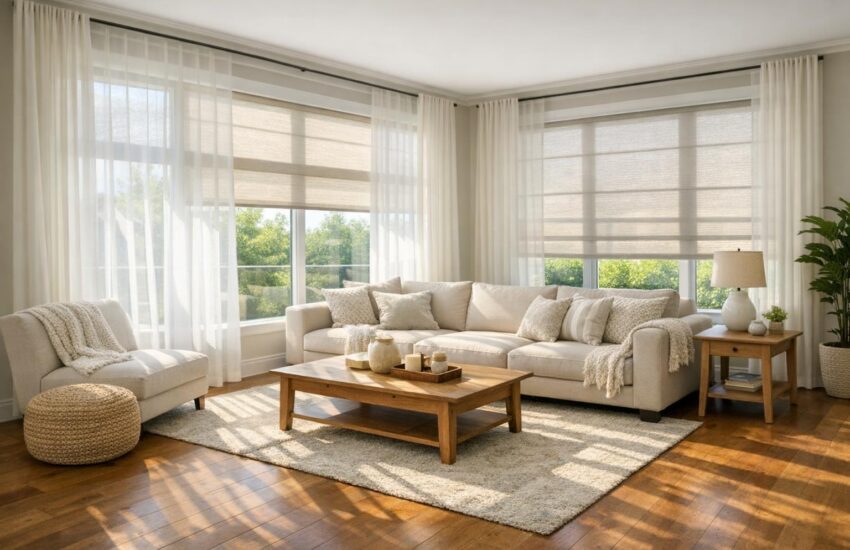
Breezy daylight, softened glare, and privacy that still feels open
Warm months change how a room feels—sun angles shift, glare gets stronger, and the line between “bright” and “washed out” gets thin. Sheer shades and semi-sheer blinds are designed for that exact moment: they deliver light diffusion (so the room stays bright) while reducing harsh hotspots and helping protect interiors from everyday UV exposure. For Colorado homes—where big windows, bright skies, and high-elevation sun are part of the lifestyle—this category can be a smart, beautiful way to keep spaces comfortable without closing them off.
What are sheer shades and semi-sheer blinds, really?
Think of sheer and semi-sheer window treatments as “light managers” rather than “light blockers.” They’re built to scatter and soften sunlight—reducing glare on screens, mellowing contrast on walls and floors, and creating that calm, airy look designers love. Many options are also designed for view-through (you can still enjoy the outdoors), with adjustable elements that shift from open to more private positions.
Common variations you may hear:
Sheer shades: Fabric vanes suspended between sheer panels for a soft glow and controllable light diffusion.
Semi-sheer blinds: Similar “layered” performance, often with a slightly more structured look and stronger privacy when tilted/closed.
Dual-layer / banded styles: Alternating sheer and opaque bands that align for light or misalign for privacy (a modern favorite for flexible rooms).
Design-wise, these treatments pair well with the warmer, texture-forward direction many designers are leaning into—especially when layered with tailored drapery for a finished look and more control at night.
Why these styles shine in warm months
Summer light can be gorgeous—until it’s bouncing off hardwood, bleaching a rug, or turning a home office into a squinting contest. Sheer shades, semi-sheer blinds, and other light-diffusing designs help because they:
Reduce glare without “cave mode”
Light diffusion preserves brightness while cutting harsh reflections—especially helpful for living rooms and street-facing home offices.
Light diffusion preserves brightness while cutting harsh reflections—especially helpful for living rooms and street-facing home offices.
Support daytime privacy
Many sheer-style treatments are designed to obscure direct views into the room during the day while still allowing view-through from inside.
Many sheer-style treatments are designed to obscure direct views into the room during the day while still allowing view-through from inside.
Help protect interiors
UV filtering varies by product and openness, but these materials are often selected specifically to reduce everyday fading risk for floors, fabrics, and artwork.
UV filtering varies by product and openness, but these materials are often selected specifically to reduce everyday fading risk for floors, fabrics, and artwork.
Did you know? Quick facts that help you choose faster
Layering is trending for a reason. Pairing a sheer/light-filtering layer with drapery or a second shade gives flexible control from morning to night.
Semi-sheer often reads “more finished” from the street. If curb appeal matters, structured sheers can look tidier than loose fabrics.
“Soft light” is measurable. Fabric openness, vane size, and color all influence how much light diffusion you’ll feel in the room.
How to pick the right sheer or semi-sheer (step-by-step)
1) Start with the job your window needs to do
A sun-washed kitchen and a street-facing bedroom need different solutions. Decide what matters most: glare control, daytime privacy, UV protection, or view-through. If you want “all of the above,” plan on layering.
2) Map your light by time of day
Spend one bright day noticing when the room is uncomfortable. East-facing windows can be intense in the morning; west-facing windows can feel hot and glary later in the day. This is where light diffusion makes a major difference—especially for spaces with screens.
3) Choose a privacy strategy (day vs. night)
Sheer and semi-sheer options usually perform best for daytime privacy. For night privacy (when interior lights are on), consider pairing with:
Tailored drapery (adds softness and insulation), or a secondary shade layer for bedrooms and media rooms.
4) Decide how “designed” you want the window to look
If your space leans minimal, a clean cassette and neutral fabric keeps things quiet. If your space wants warmth, consider pairing light-diffusing shades with textured side panels or a valance for depth.
5) Think about operation: cordless or motorized
Warm months often mean windows are used more frequently—opened for morning light, closed for afternoon glare, adjusted for evening. Cordless is sleek; motorized is a favorite for tall windows, hard-to-reach areas, and “set it and forget it” routines.
Quick comparison table
| Option | Best for | Light diffusion | Day privacy | Night privacy |
|---|---|---|---|---|
| Sheer shades | Living rooms, offices, view-focused windows | Excellent | Strong (varies) | Needs layering |
| Semi-sheer blinds | Street-facing rooms, polished curb appeal | Very good | Very strong | Better, still may layer |
| Layered setup (sheer + drapery) | Bedrooms, flexible “all-day” rooms | Excellent | Excellent | Excellent |
Tip: If you love the airy look but need true darkness for sleep, layering is usually the simplest path—keep the sheer layer for daytime and add a room-darkening partner for evenings.
Colorado angle: bright skies, big windows, and high-elevation sun
Colorado homes often feature expansive glazing to capture mountain views and natural light. That’s a perfect match for sheer shades and semi-sheer blinds—especially when you want to keep rooms feeling open during long daylight hours. A few local-fit guidelines:
• Prioritize glare control in view rooms: Great rooms, kitchens, and home offices often benefit from soft diffusion instead of full block-out.
• Treat west-facing windows intentionally: Afternoon light can be intense—consider a more privacy-forward semi-sheer or a layered approach.
• Don’t skip professional measuring: Even small fit issues are noticeable on large windows, especially with sleek modern headrails.
• Treat west-facing windows intentionally: Afternoon light can be intense—consider a more privacy-forward semi-sheer or a layered approach.
• Don’t skip professional measuring: Even small fit issues are noticeable on large windows, especially with sleek modern headrails.
If you’re working with an interior designer, sheer and semi-sheer treatments are also easy to “spec” across multiple rooms while still customizing fabric texture, vane size, and trim details to match each space.
Explore related options on our site:
Custom Window Shades (browse styles for different light levels)
Roman Shades (soft fabric structure with a tailored look)
Solar Shades (performance-forward glare and UV control)
Custom Drapery (ideal for layering and night privacy)
Window Treatment Installations (precision fit and clean finishing)
Roman Shades (soft fabric structure with a tailored look)
Solar Shades (performance-forward glare and UV control)
Custom Drapery (ideal for layering and night privacy)
Window Treatment Installations (precision fit and clean finishing)
Want an airy look without the glare?
Woven Window helps Colorado homeowners and design professionals choose the right sheer shades, semi-sheer blinds, and layered combinations—measured precisely, fabricated with care, and installed professionally for smooth operation.
FAQ: Sheer shades, semi-sheer blinds, and light diffusion
Do sheer shades provide privacy?
They’re excellent for daytime privacy in many rooms because they soften visibility from outside. At night, when interior lights are on, most homes benefit from layering (drapery or a secondary shade) for full privacy.
They’re excellent for daytime privacy in many rooms because they soften visibility from outside. At night, when interior lights are on, most homes benefit from layering (drapery or a secondary shade) for full privacy.
What’s the difference between sheer shades and semi-sheer blinds?
Both create light diffusion, but semi-sheer options often feel slightly more structured and can read more private when adjusted/closed. The best fit depends on the room’s exposure, view goals, and how tailored you want the window to look.
Both create light diffusion, but semi-sheer options often feel slightly more structured and can read more private when adjusted/closed. The best fit depends on the room’s exposure, view goals, and how tailored you want the window to look.
Will these help with heat in the summer?
They primarily manage glare and visual comfort. For heat reduction, consider pairing with performance fabrics (or layering with solar/insulating options) and focusing on windows that take strong afternoon sun.
They primarily manage glare and visual comfort. For heat reduction, consider pairing with performance fabrics (or layering with solar/insulating options) and focusing on windows that take strong afternoon sun.
Are sheer shades a good choice for TV rooms?
If the room is used mostly during the day, light diffusion can reduce screen glare without darkening the whole space. If you need cinema-level darkness, plan on layering with a room-darkening shade or drapery.
If the room is used mostly during the day, light diffusion can reduce screen glare without darkening the whole space. If you need cinema-level darkness, plan on layering with a room-darkening shade or drapery.
Can I combine sheers with drapery without making the window look heavy?
Yes. A clean sheer layer paired with tailored side panels is one of the easiest ways to get a finished, designer look while keeping the room feeling open.
Yes. A clean sheer layer paired with tailored side panels is one of the easiest ways to get a finished, designer look while keeping the room feeling open.
Glossary
Light diffusion: The way a fabric or shade scatters sunlight to reduce harsh glare and create a softer, more even glow.
Sheer shades: A shade style with sheer panels and internal fabric vanes that adjust to control brightness while maintaining an airy feel.
Semi-sheer blinds: Window coverings that combine soft light filtering with adjustable structure for stronger privacy and control.
View-through: The ability to see outdoors while the window treatment is down (varies by material, color, and openness).
Layering: Using two window treatment components (for example, a sheer shade plus drapery) to improve flexibility for daylight, privacy, and style.
