
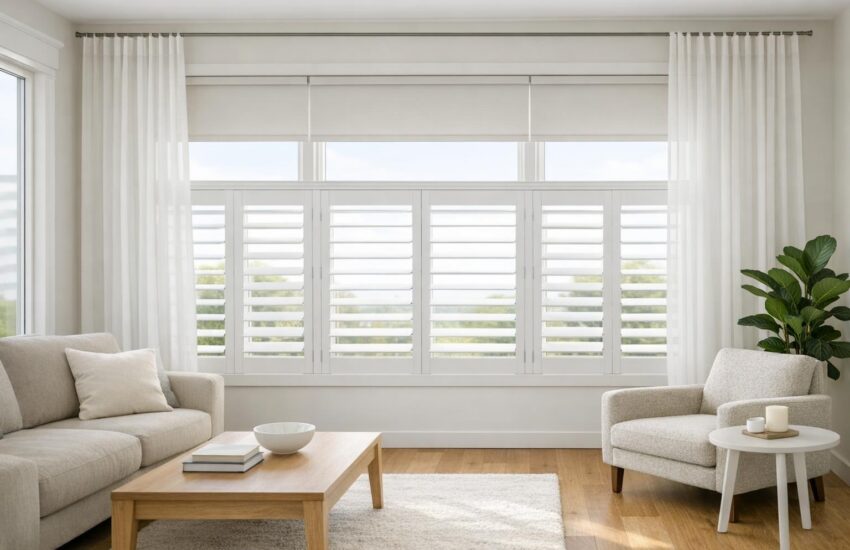
Less dust. Fewer sneezes. Better comfort—without giving up great design.
Allergies don’t stop at the front door. Pollen, pet dander, and everyday household dust can settle on soft surfaces—especially anything with folds, texture, or hard-to-reach edges. The right window treatments can help reduce what accumulates, make cleaning easier, and support a healthier indoor environment. For Colorado homes—where spring pollen, dry air, and big temperature swings are common—smart material choices matter even more.
Quick note: Allergy-friendly doesn’t mean “allergens vanish.” It means choosing surfaces that collect less, designs that clean easily, and setups that help you manage humidity and airflow—all key factors in reducing indoor allergen buildup.
Why window treatments matter for indoor allergens
Indoor allergens commonly ride in on clothing, shoes, pets, and open windows. Once inside, they settle onto horizontal surfaces and porous materials. The U.S. Environmental Protection Agency highlights that indoor dust can contain biological contaminants like pollen, mold spores, pet dander, and dust mites—and emphasizes frequent cleaning and humidity control to reduce buildup.
That’s where your window coverings come in: thick fabrics, deep pleats, and layered treatments can behave like “allergen shelves,” while smoother, more wipeable surfaces tend to be easier to keep clean. Also, higher indoor humidity can encourage dust mites and mold—another reason to match treatments to your room’s conditions (kitchens, baths, basements, and bedrooms often need different strategies). The EPA notes that humidity can influence indoor pollutant levels and that moisture control helps prevent mold issues.
The most allergy-friendly designs (and why they work)
1) Roller & solar shades (sleek, low “dust footprint”)
Roller and solar shades are popular in allergy-conscious homes because they have a relatively smooth face and minimal folds. That makes them easier to wipe or vacuum with a brush attachment—and less likely to trap pollen compared to heavier fabric drapery. Solar shades add glare reduction and UV protection, which is helpful for sun-heavy rooms and large windows.
2) Plantation shutters (durable, wipe-clean surfaces)
Shutters are one of the easiest treatments to maintain because the louvers can be dusted quickly and wiped down as needed. They’re also excellent for controlling light and privacy without adding soft, porous layers to the room.
3) Cellular (honeycomb) shades (comfort + cleaner look)
Cellular shades are valued for insulation and comfort. They can be a good allergy-friendly fit when you want softness without the extra folds of drapery. For bedrooms and west-facing windows, they’re a strong choice for both temperature control and simplified maintenance.
4) If you love drapes: choose “dust-repellent drapes” by design
Drapery can still work in an allergy-conscious home—especially when it’s thoughtfully specified. The key is reducing what traps dust:
Go lighter: Avoid overly heavy, high-pile, or textured fabrics where dust can cling.
Limit layers: One clean-lined panel pair can be easier to maintain than multiple decorative layers.
Prioritize washability: If you want true allergy-friendly performance, select fabrics and constructions that can be cleaned on a realistic schedule.
Hypoallergenic fabrics: what to look for (and what to avoid)
When clients ask for hypoallergenic fabrics, they’re often really asking for fabrics that: (1) shed dust easily, (2) don’t hold moisture, and (3) can be cleaned without stress.
Often better choices:
Tighter weaves and smoother finishes that don’t “grab” dust
Performance fabrics designed for durability and easier cleaning
Interlined options only when needed (extra layers can mean more places for dust)
Approach with care:
Very textured textiles, heavy chenilles, or high-pile materials that can hold dust
Overly complex drapery styles with deep pleating if you don’t plan to maintain them
Treatments placed where moisture is frequent without proper ventilation (risk of mold)
If you’re sensitive to chemical odors or finishes, mention that during the design consult. A good workroom can help you select materials and linings that balance performance, appearance, and comfort.
Comparison table: choosing the easiest-to-clean option for your space
| Treatment Type | Allergy-Friendly Strength | Typical Maintenance | Best Rooms |
|---|---|---|---|
| Solar / Roller Shades | Smooth surface; minimal folds | Light vacuuming; spot wiping | Living rooms, offices, sun-facing windows |
| Shutters | Wipe-clean louvers; durable | Quick dusting + occasional wipe down | Whole-home, especially kitchens & high-traffic areas |
| Cellular Shades | Clean-lined; adds insulation | Vacuum with brush; gentle dusting | Bedrooms, nurseries, temperature-sensitive rooms |
| Roman Shades | Beautiful, but fabric folds can hold dust | Regular vacuuming; professional cleaning as needed | Dining rooms, primary suites, style-forward spaces |
| Drapery Panels | Depends on fabric + wash plan | Vacuum with upholstery tool; periodic laundering/dry cleaning | Great rooms, bedrooms (when specified carefully) |
A Colorado-specific approach: pollen, dry seasons, and big sun exposure
In Colorado, many households deal with seasonal pollen bursts, dust tracked in from outdoors, and intense sunshine—often all in the same week. A few practical, local-fit tips:
Prioritize wipeable surfaces on high-use windows: Entry-adjacent windows, kitchen windows, and patio doors benefit from shades or shutters that you can clean quickly.
Use solar shades on sun-heavy elevations: They help reduce heat and glare while keeping the treatment simple and low-maintenance.
Keep humidity in a healthy range: Dust mites and mold are impacted by moisture. EPA guidance highlights the role of humidity in indoor air quality and pollutant levels; managing moisture helps limit conditions that support biological contaminants.
Plan for “real-life cleaning”: If you won’t launder drapes regularly, consider using shades as the functional layer and keep drapery decorative and minimal.
If you’re updating an entire home, your installer’s details matter too—treatments that fit correctly and operate smoothly are easier to keep closed during high pollen days and easier to clean because there are fewer gaps, droops, or snag points.
Want allergy-friendly options tailored to your home?
Woven Window helps Colorado homeowners and interior designers choose materials and designs that balance aesthetics, easy maintenance, privacy, and light control—then finishes the job with professional fabrication and installation.
FAQ: Allergy-friendly window treatments
What window treatments are best for allergies?
Treatments with fewer folds and smoother surfaces are typically easier to keep clean—think roller shades, solar shades, and shutters. If you prefer fabric, choose simpler constructions and a realistic cleaning plan.
Are drapes bad for dust allergies?
Not always. Heavy, highly textured drapes can trap dust more readily, but well-specified drapery (lighter fabrics, fewer layers, cleanable materials) can still be part of an allergy-conscious design—especially when paired with an easy-to-clean shade as the main functional layer.
How often should I clean blinds, shades, or curtains to reduce allergens?
A good baseline is light dusting or vacuuming weekly in high-use rooms, with deeper cleaning seasonally (or more often during peak pollen). The best routine is the one you’ll actually maintain—choosing low-maintenance materials makes consistency easier.
Do motorized shades help with allergies?
They can. Motorization helps you keep treatments closed during high pollen times without handling fabric or cords. It also encourages consistent daily use (for privacy, glare control, and comfort), which can reduce how often windows are opened when pollen counts are high.
What are “dust-repellent drapes” really?
It’s less about a magic fabric and more about smart specification: smoother textiles, tighter weaves, fewer folds, and a construction that won’t be a hassle to clean. A designer can also recommend linings and hardware that improve performance without adding bulk.
Glossary
Hypoallergenic fabrics
Materials chosen to reduce irritation or allergen buildup—typically by being smoother, easier to clean, and less likely to trap dust or moisture.
Solar shade
A shade made from a screen-like material that reduces glare and UV while preserving outward view (depending on openness factor).
Cellular (honeycomb) shade
A shade constructed with air pockets (“cells”) that improve insulation and help stabilize indoor temperatures.
Openness factor
A measure used in solar shades that indicates how much light and view passes through; lower openness typically means more privacy and glare control.
