
• Home
  • Stylish Patio Door Solutions: Panel Tracks and Vertical Blinds for Seamless Indoor-Outdoor Living

Stylish Patio Door Solutions: Panel Tracks and Vertical Blinds for Seamless Indoor-Outdoor Living

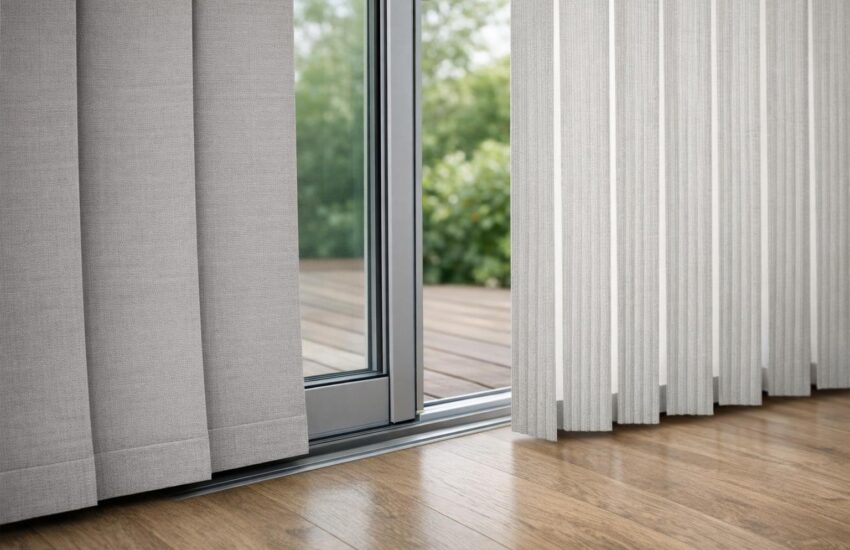
Modern living room with sliding glass patio doors featuring panel track shades and vertical blinds, showcasing seamless indoor-outdoor transition and stylish window treatments.
by:wovenwindow February 20, 2026 0 Comments

A smarter way to treat sliding doors—without sacrificing the view

Patio doors do a lot of work in Colorado homes: they’re the brightest “window” in the room, the most-used pathway to decks and backyards, and often the biggest source of glare, heat gain, and privacy concerns. The right patio door treatments should feel effortless day-to-day—easy to slide open, easy to clean, and designed to look intentional from every angle. At Woven Window, we help homeowners and designers across Colorado compare modern panel tracks and updated vertical blinds to create a clean, comfortable indoor-outdoor flow.

Why sliding doors need a different approach than standard windows

A patio door treatment has to move the same direction your door moves. That sounds obvious, but it’s the reason many “pretty” window ideas fail in real life. Anything bulky at the handle side, anything that drags on the floor, or anything that fights the door track becomes annoying fast.

A great solution balances four priorities:

1) Access: You should be able to use the door multiple times a day without wrestling fabric.
2) Light control: Manage glare on TV screens and afternoon sun without darkening the whole room.
3) Privacy: Especially important at night when interior lights turn glass into a mirror.
4) Durability: High-traffic openings need materials that tolerate hands, pets, and frequent movement.

Panel tracks: clean lines, modern movement

Panel track shades (often called sliding panels) are a favorite for contemporary spaces because they read like architecture—wide panels that glide along a top track, stacking neatly to one side. They’re especially strong for large glass spans where you want a streamlined look.

Where panel tracks shine
Large openings: Multi-panel sliders and wide expanses of glass.
Minimalist design: Crisp, flat planes instead of slats.
Solar control: Performance fabrics can reduce glare while preserving a bright feel.
Zoning: You can cover part of the door while leaving the “traffic panel” clear.

Design tip: Match the panel width and stack direction to how you actually use the door. If the active door panel is on the right, you typically want the treatment to stack left (or split stack), keeping the walking path clear.

Hardware note: Panel systems require enough room at the top for the track and carriers, plus enough wall space on the stacking side to “park” the panels without blocking the door. A professional measure helps avoid handle conflicts and odd partial coverage.

Vertical blinds: practical, flexible, and more stylish than their reputation

Modern vertical blinds have come a long way. Today’s options include improved vane shapes, upgraded textures, better light control, and cleaner headrails that feel far less “builder basic.” They’re still one of the most functional sliding-door solutions because they do two jobs well: they slide out of the way and they tilt to fine-tune privacy and daylight.

Where vertical blinds shine
Everyday use: Great for doors that open constantly (kids, dogs, grilling season).
Glare control: Tilt vanes to cut direct sun without fully closing.
Budget + longevity: A strong value for rentals, updates, and high-traffic rooms.
Easy repairs: Individual vanes can be replaced if one gets damaged.

Style note: If you’ve only seen older vinyl verticals, ask to see current fabrics, textured vanes, and cleaner control options. The “right” vertical can feel surprisingly tailored when measured and installed precisely.

Panel tracks vs. vertical blinds: a quick comparison

Feature Panel Tracks Vertical Blinds
Look Modern, wide “panels” with clean lines Versatile; can be modern with updated textures
Light control By coverage + fabric openness (solar, light-filtering, blackout) Excellent fine-tuning via vane tilt
Door access Smooth slide; stacks to one side (or split stack) Stacks to one side; easy daily use
Best for Large glass + design-forward rooms High-traffic doors + flexible privacy control
Maintenance Occasional vacuuming/dusting; depends on fabric Easy wipe-down; vane replacement is simple

How to choose the right patio door treatment (step-by-step)

1) Start with how you use the door

If it’s your primary path to the yard, pick something you won’t resent using ten times a day. For frequent use, durability and smooth operation matter as much as aesthetics.

2) Map the sun and the sightlines

South- and west-facing doors can create strong late-day glare. Solar fabrics can cut brightness while still feeling open. For close neighbors, choose a privacy-forward fabric or a treatment that tilts for fine control.

3) Decide what “privacy” means in your room

A living room might need daytime glare control plus nighttime privacy. A ground-floor condo might need privacy all day. Your answer guides the openness factor (for solar) or whether you need lined/blackout materials.

4) Check stack space and handle clearance

The most common patio door frustration is a treatment that interferes with the door handle or blocks too much glass when stacked open. A professional measure helps determine:

• Best stack direction (left, right, or split)
• Track placement for smooth clearance
• Whether an inside- or outside-mount makes more sense

5) Choose controls with safety and convenience in mind

Cord safety standards have pushed the industry toward safer operating systems, and many homeowners now prefer wand control or motorization—especially for large openings. Motorized options are also excellent for tall doors or hard-to-reach transoms.

Did you know? Quick facts that matter for sliding doors

Small upgrades can feel huge. Switching from a bulky curtain setup to a smooth-glide track system often makes the whole room feel more open—because you actually use the treatment correctly.
Stack direction is comfort. A treatment that stacks into a walking path becomes a daily annoyance (and gets damaged faster).
Glare isn’t just brightness. The “hot spot” on floors and furniture is often the real issue—solar fabrics can help without turning the room into a cave.
Layering is allowed. Panel tracks or vertical blinds can be paired with stationary side panels for a softer, designer finish when the door isn’t in use.

A Colorado angle: what works best in our light, seasons, and lifestyles

Colorado sun can be intense, and many homes have large glass openings to capture mountain light. That’s great—until afternoon glare makes a living room uncomfortable or fades flooring and furniture over time. For many homes along the Front Range, the sweet spot is choosing a patio door system that:

• Handles strong west light with solar or light-filtering performance materials
• Supports indoor-outdoor entertaining (easy open/close during cookouts and gatherings)
• Adds nighttime privacy without blocking daytime brightness
• Plays nicely with pets and kids (durable materials, safer controls)

If you’re balancing design goals with daily practicality, Woven Window’s Denver-area showroom and fabrication expertise make it easier to see materials in person and tailor the stack, opacity, and hardware to your exact door configuration.

Ready for a patio door treatment that actually fits your life?

Get help selecting the right fabric, openness, stack direction, and control style for your sliding door. Woven Window has served Colorado homes and commercial spaces with custom solutions since 1999—measured, fabricated, and installed with care.

FAQ: Panel tracks, vertical blinds, and patio door treatments

Are panel tracks the same thing as vertical blinds?
They’re related, but not the same. Panel tracks use wide fabric panels that slide on a track and stack to the side. Vertical blinds use individual vanes that both slide and tilt, giving more “micro-control” over light and privacy.
What’s the most practical option for a high-traffic sliding glass door?
Vertical blinds are often the easiest day-to-day because they stack neatly and can be tilted without fully opening. Panel tracks are also practical, especially if you prefer a modern look—just plan the stack direction carefully so the panels park out of the walking path.
Can I get blackout for a patio door?
Yes. Both panel track systems and vertical solutions can be specified with room-darkening or blackout materials. The key is reviewing light gaps at edges and between panels/vanes—your installer can recommend the best approach for your door configuration.
Do patio door treatments help with energy efficiency?
They can improve comfort by reducing direct sun and managing drafts at glass. Material choice matters: solar fabrics help with glare and heat gain, while lined fabrics can add a cozier feel in colder months. For best results, pair the right covering with a well-sealed door.
What control options are best—wand, cord, or motorized?
Wand controls are popular for simplicity and easy operation. Motorized controls are ideal for larger openings and for a clean look (especially in design-forward spaces). Your consultant can help match controls to your door height, usage frequency, and safety preferences.
Should the treatment stack on the same side as the door opens?
Usually, you want the stack away from the main traffic path and away from the handle side whenever possible. If wall space is limited, a split stack or a specific control placement can keep the door functional without blocking too much glass.

Glossary

Panel tracks (sliding panels): Wide fabric panels that glide on a top track and stack to one side (or split to both sides) for large windows and sliding doors.
Vertical blinds: Individual vertical vanes that slide open and closed and tilt to control light and privacy.
Stack (stacking space): The area where panels or vanes “park” when the treatment is fully open.
Openness factor (solar fabrics): A measure that influences how much light and view passes through a solar shade fabric (lower openness typically means more glare reduction and privacy).
Inside mount vs. outside mount: Inside mount sits within the window/door opening for a built-in look; outside mount installs above/outside the opening and can help with coverage and light gaps.

Categories:

Call us now!