
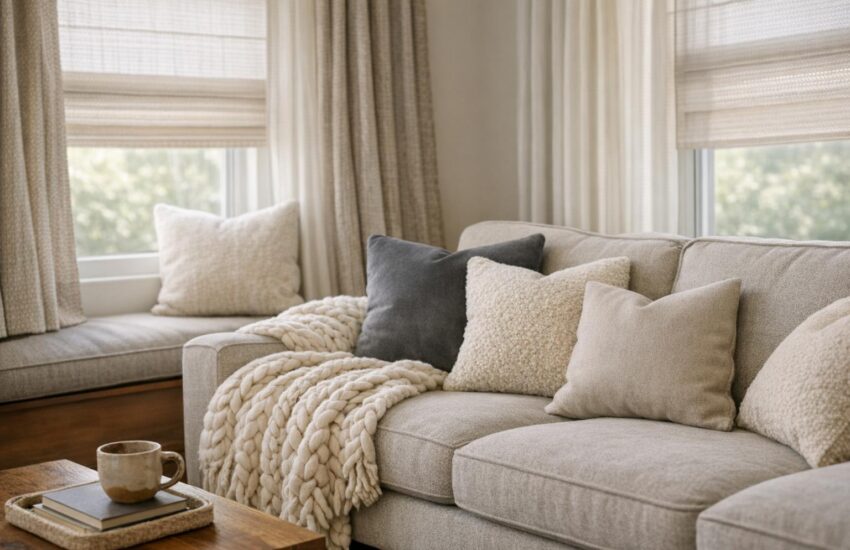
Warm textures, practical performance, and custom details that make a home feel calm
Hygge is that unmistakable sense of comfort—soft light, welcoming textures, and rooms that feel restorative instead of “done.” In Colorado, hygge style gets even better when it’s paired with real-life durability: sun exposure at higher altitude, dry winter air, busy households, pets, and open-concept layouts that ask a lot from every fabric choice. At Woven Window, we’ve been helping homeowners and designers across Colorado since 1999 create custom upholstery and soft furnishings that look inviting and live beautifully—season after season.
What “hygge” looks like in fabric and furnishings
Hygge home decor isn’t about filling a room with stuff—it’s about choosing a few high-impact textiles that add warmth, softness, and quiet personality. Think: layered neutrals, tactile weaves, gentle drape, and finishes that feel pleasant to the touch. The most successful hygge rooms usually share three fabric “moves”:
1) Texture over pattern: bouclé, brushed cotton, wool blends, nubby linens, and matte velvets bring depth without visual noise.
2) Layering at multiple heights: pillows + throws + upholstered seating + drapery/shades create a cocoon effect.
3) Comfortable light control: soft, diffused daylight by day and privacy by night—without making the home feel dark.
Main hygge upgrades: upholstery, cushions, and “soft architecture”
If you want the biggest comfort payoff, prioritize upholstered pieces and soft furnishings that people actually touch. These upgrades work well whether you’re refreshing one room or bringing a consistent feel through the whole home.
Custom upholstery: the anchor of a cozy room
Upholstery sets the “hand feel” of your space. A great fabric can make a formal chair feel relaxed, or help a family sofa look elevated while still being spill-friendly. Hygge upholstery usually leans toward:
Matte textures: performance velvets, nubby weaves, chenille, brushed cotton blends.
Comfortable neutrals: warm whites, oat, sand, camel, mushroom, soft charcoal.
High-use practicality: stain resistance, higher rub counts (durability), and cleanability for everyday life.
For Colorado homes, we often recommend prioritizing fade resistance as much as stain resistance—especially for south- and west-facing rooms.
Explore our upholstery offerings here: Custom Fabric & Upholstery and learn more about custom upholstery, cushions, and bedding.
Custom cushions and pillows: small pieces, big hygge energy
Pillows are where you can add softness and personality without committing to an entire sofa fabric. A hygge-forward pillow mix often uses 3–5 pillows per seating area with varied textures (not all the same weave). A reliable formula:
Soft furnishings beyond pillows: the “comfort layer” most homes miss
Hygge is often won (or lost) in the supporting cast:
Bench cushions & breakfast nook seating: makes gathering spaces feel lived-in and welcoming.
Window seat cushions: a cozy statement that also adds functional seating.
Headboards and bedding details: an upholstered headboard or tailored bed skirt can soften a room instantly.
Layered throws: keep one on every main seating piece; rotate seasonally for easy refresh.
Window treatments that support hygge (without making rooms feel heavy)
Light is a huge part of hygge—especially in winter. The goal is flexible control: soft daylight when you want it, privacy when you need it, and a warm-looking room at night.
If your hygge goal is “soft at night,” consider layering a functional shade with drapery. If your goal is “calm by day,” a shade in a warm neutral with a clean hem bar can feel serene without looking stark.
Step-by-step: how to build a hygge fabric plan (that still feels “designer”)
Step 1: Pick your comfort palette (2–3 core tones)
Start with warm neutrals that flatter Colorado light: oat, flax, sand, caramel, soft greige, and warm charcoal. Then add one grounding tone (olive, tobacco, clay, or deep navy) in small doses.
Step 2: Choose one “hero texture” per room
Examples: a nubby boucle chair, a velvet banquette cushion, or linen-look drapery with a soft hand. The hero texture should be noticeable up close, but not busy from across the room.
Step 3: Match durability to lifestyle (not the other way around)
If you have kids, pets, or frequent guests, look for performance upholstery that cleans easily and holds up to daily use—especially on seat cushions and arms. For quieter rooms (formal living, primary suite), you can lean more “sensory,” like softer velvets or delicate textures.
Need help choosing drapery textiles? This guide can help you narrow options: Best Drapery and Curtain Fabrics.
Step 4: Add light control that supports the mood
Hygge lighting starts with windows. If glare is the issue, consider a solar shade; if nighttime coziness and insulation are priorities, layering drapery over a shade is a great approach. For a polished finish, professional measuring and installation prevents the small gaps and operational issues that can make a room feel “almost.”
Learn more about installation support here: Window Treatment Installations.
Did you know? Quick comfort facts that designers use
Texture reads like color. A warm-white bouclé can feel “richer” than a darker flat weave because it catches light and shadow.
Soft window layers can improve perceived warmth. Drapery and lined shades reduce the “hard surface” feel that makes rooms seem colder—even before you touch the thermostat.
Commercial spaces often need flame-tested textiles. For restaurants, hotels, healthcare, and many public-facing interiors, fabrics may need to meet requirements like NFPA 701 depending on the application and local codes—plan for this early so selections stay beautiful and compliant.
A Colorado angle: design for bright sun, dry air, and four true seasons
Colorado homes have a few repeat challenges that are easy to solve with thoughtful textile planning:
Sun and fading: prioritize linings, UV-reducing shades, and fabrics known for colorfastness—especially in south/west exposures and rooms with big glass.
Static and dryness: textured synthetics and performance blends can stay comfortable while resisting wrinkles and wear.
Winter coziness + summer glare: layering (shade + drapery) gives you seasonal flexibility without changing the whole look.
If you’re working with a designer, managing a renovation, or furnishing a second home, Woven Window can coordinate materials, fabrication, and installation so the hygge feeling is consistent from room to room. For trade and commercial needs, explore: Commercial Window Treatments.
Ready to make your home feel cozier—without sacrificing durability?
Get guidance on fabrics, cushions, upholstery, and window treatment layers tailored to your rooms, your light, and your daily life. Our team can help you select materials, coordinate textures, and ensure everything is measured and installed correctly.
FAQ: Hygge, upholstery, and soft furnishings
Glossary: helpful terms for upholstery and soft furnishings
Bouclé
A looped yarn fabric known for a cozy, nubby texture that adds warmth and depth.
Lining (drapery lining)
An added fabric layer behind drapery that improves body, privacy, light control, and helps protect face fabric from sun exposure.
Performance fabric
Textiles engineered for durability and easier cleaning (often with stain resistance) while still offering a comfortable look and feel.
Rub count (abrasion rating)
A measure used to estimate upholstery durability—helpful for matching fabric to expected wear (family room vs. formal seating).
NFPA 701
A commonly referenced U.S. standard for flame propagation testing of certain textiles used in applications like curtains, drapery, and other decorative fabrics in public spaces.
