
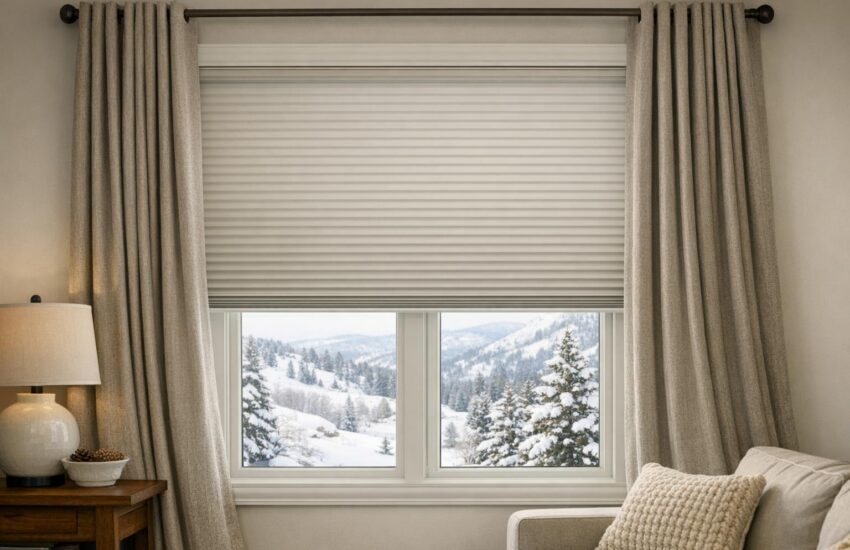
Comfort you can feel—without cranking the heat
Colorado winters can be bright and beautiful, but they’re also hard on homes—especially around windows where drafts, cold glass, and nighttime heat loss can make entire rooms feel chilly. The right insulating window treatments help reduce that “cold wall” effect, improve comfort near windows, and support lower heating costs—without sacrificing design. Below is a practical guide to thermal drapes in Colorado, cellular shades for winter, and smart layering strategies that interior designers and homeowners rely on for both style and performance.
Why windows feel cold (even when they’re “fine”)
Winter discomfort near windows usually comes from a mix of conduction (heat moving through glass), convection (air currents created when warm room air meets cold glass), and radiant heat loss (your body “seeing” a cold surface and losing heat to it). High-performance window coverings help by adding a still-air layer, reducing air movement at the glass, and buffering radiant temperature differences—so the room feels more stable and livable.
The U.S. Department of Energy highlights insulated cellular shades as a strong option when you want meaningful energy savings and comfort from window coverings. They can be especially effective at reducing winter heat loss when properly fitted.
Top insulating window treatments (and where each one shines)
| Treatment | Best for | Insulation strengths | Design notes |
|---|---|---|---|
| Cellular (Honeycomb) Shades | Bedrooms, living rooms, whole-home efficiency upgrades | Air pockets slow heat transfer; great for winter comfort | Clean lines; many opacities; top-down/bottom-up options |
| Thermal Drapes / Lined Drapery | Large windows, older homes, high-style spaces | Adds layered air barrier; helps reduce drafts around the frame | Fabric choice + lining matter; can be tailored to architecture |
| Roman Shades (with lining/interlining) | Statement windows, dining rooms, layered looks | Extra fabric layers improve softness and thermal buffering | Highly customizable; pairs beautifully with side panels |
| Solar / Roller Shades (layered) | Daytime glare control + winter sun management | Best when paired with drapery for nighttime insulation | Modern and minimal; great for preserving mountain views |
| Shutters (wood/composite) | Classic architecture; privacy + light control | Adds a solid layer at the window; can reduce drafts with good fit | Timeless; strong curb-appeal; great for street-facing rooms |
Designer tip: For many Colorado homes, the winning formula is daytime control + nighttime insulation—for example, solar shades to manage glare and UV during the day, plus drapery or lined romans for evenings.
Quick “Did you know?” winter comfort facts
Insulated cellular shades are frequently recommended for significant comfort and energy benefits because their honeycomb structure traps air. That trapped air acts as an insulating layer at the glass.
You can have “good windows” and still feel cold: air leakage and radiant temperature matter just as much as the window’s age. A properly fitted shade or well-hung drape can noticeably improve how a room feels.
Winter sun can be your friend. Managing solar heat gain strategically—open treatments when sun is warming the room, close them when it’s gone—can improve comfort without changing your thermostat setting.
How to choose insulating window treatments (step-by-step)
1) Start with the problem: drafts, cold glass, glare, or all three?
If you feel a draft, prioritize treatments that seal well at the sides (cellular shades with side channels, or drapery that overlaps the window). If you feel radiant chill near the glass, add a thicker barrier (lined drapery, interlined romans, or multi-cell shades). If the room is bright but still cold, you may want light-filtering cellular shades for daytime plus a warmer layer at night.
2) Pick your “workhorse” insulator
For many homes, that workhorse is a cellular shade—especially in bedrooms and any room where you want consistent comfort. Look at single-cell vs. double-cell options, and consider room orientation and how much light you want.
If you’re searching specifically for cellular shades winter performance, focus less on the marketing name and more on fit (inside mount depth, light gaps), cell size, and whether you’ll use them consistently at night.
3) Add a “comfort layer” for nights (especially on big glass)
This is where thermal drapes in Colorado earn their keep. A well-designed drapery plan can cover small gaps around the window frame, soften acoustics, and bring visual warmth to rooms with a lot of glass. Lining and interlining choices can be tailored to your goals—light control, insulation, or both.
4) Don’t ignore hardware and installation details
Insulation performance is often won or lost in the details: mounting height, return depth, side overlap, and whether the treatment clears trim properly. Professional measuring and installation help ensure your drapery stacks neatly, your shades operate smoothly, and your insulation layer actually sits where it needs to.
Colorado-specific strategy: sun, elevation, and big temperature swings
In Colorado (including the Denver metro), winter often brings strong sunshine paired with fast temperature drops after sundown. That makes window-treatment scheduling a practical “energy habit”:
If you have large west-facing glass (common in view-focused homes), consider a layered plan that protects furnishings from winter glare and helps with nighttime comfort—without making daytime feel dim.
Ready to make your home feel warmer—window by window?
Woven Window has served Colorado since 1999 with custom fabrication, expert design guidance, and professional installation—helping homeowners and interior designers choose insulating solutions that look beautiful and perform through winter.
FAQ: Insulating window treatments for winter
Are cellular shades good for Colorado winters?
Yes—especially when they’re fitted well and used consistently at night. Their honeycomb structure traps air, which helps slow heat loss and improves comfort near cold glass.
What makes drapes “thermal”?
Thermal performance comes from the full system: fabric weight, lining (and optional interlining), how much the drapes overlap the window, and whether they seal gaps at the sides. “Thermal drapes Colorado” searches often point to blackout, but insulation can be achieved with multiple lining strategies—even in lighter, designer-forward fabrics.
Is layering really worth it?
For many Colorado homes, yes. A shade can handle daylight control and create an air barrier, while drapery adds another comfort layer at night and elevates the room visually—especially on tall windows or wide sliders.
What’s the best option for bedrooms in winter?
A common high-comfort combination is blackout or room-darkening cellular shades plus side panels or lined drapery if the room has large glass or feels drafty. The best choice depends on sleep sensitivity, light gaps, and window size.
Do I need new windows, or can treatments help?
Many homeowners see a noticeable comfort improvement from well-fitted insulating treatments—especially when drafts or radiant chill are the main issue. If windows are extremely leaky or failing, addressing the window itself may also be important, but treatments are often a smart first step for comfort and design.
Glossary (helpful terms when shopping for winter comfort)
Explore options that pair beautifully with winter performance: Cellular (Honeycomb) Shades, Custom Drapery, and Roman Shades.
