
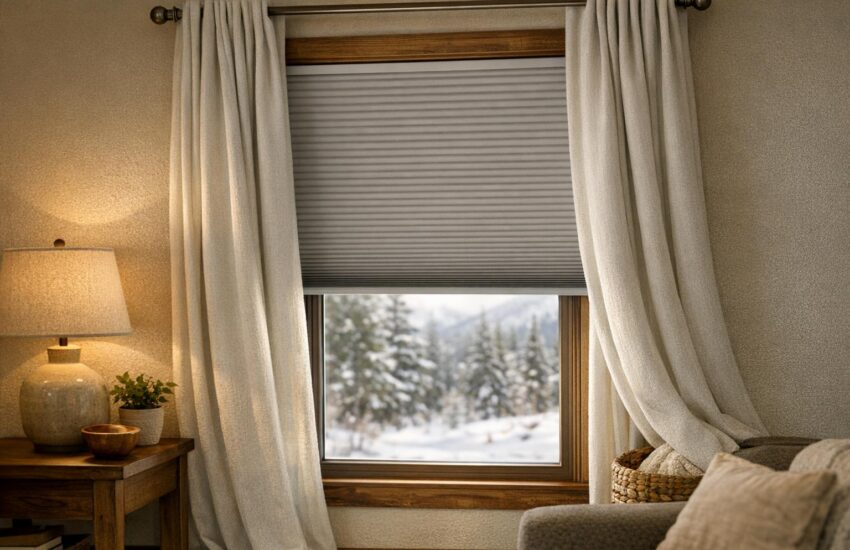
Warm rooms, calmer sleep, and better control of Colorado’s changing light
Colorado weather loves extremes: bright high-altitude sun, sharp temperature drops after sunset, and winter drafts that can make even a “heated” room feel chilly near the glass. Two of the most effective comfort upgrades you can make—without replacing windows—are thermal drapes and blackout shades. Both can improve privacy and help with insulation, but they excel in different ways depending on how your room is used, how the window is built, and how sensitive you are to light and temperature swings.
What “comfort” really means at the window
Comfort near windows isn’t just about the thermostat. It’s usually a mix of:
Radiant chill: When you “feel cold” sitting by a window even if the room air is warm.
Convection drafts: Air currents created when warm air hits cold glass and sinks.
Light control: Streetlights, early sunrise, or intense afternoon glare.
Privacy + acoustics: Especially for bedrooms, nurseries, and street-facing rooms.
The best window-treatment choice is the one that addresses your top two comfort problems first (usually: winter comfort and light control).
Thermal drapes: why they feel cozy (and when they work best)
Thermal drapes are typically floor-length drapery panels made with insulating linings or interlinings designed to reduce heat transfer and help block drafts. The “magic” is often less about the face fabric and more about how well the drapery creates a stable layer of air between your room and the cold glass.
Best for: Drafty windows, older homes, tall windows, and rooms where you want softness and sound absorption.
What to prioritize: Fullness, return/overlap at the sides, and a close fit at the top to reduce air movement.
Bonus: Layering with a shade behind drapery can improve both insulation and light control.
The U.S. Department of Energy notes that closing conventional draperies during cold weather can reduce heat loss and improve thermal comfort—especially when used thoughtfully. That’s a practical reminder that “good enough” can still be meaningful, and “properly designed” can be a noticeable upgrade in a Colorado winter.
Blackout shades: what they do differently (and why bedrooms love them)
Blackout shades are built to block light through the shade material (and, depending on the design, reduce light gaps at the edges). When you’re choosing blackout for sleep, media rooms, or nurseries, the biggest factor isn’t the fabric color—it’s the system: coverage, fit, and how much side light you’re willing to tolerate.
Best for: Bedrooms, nurseries, TV rooms, and any space where glare control matters daily.
Comfort upside: Many blackout products also add a thermal buffer—especially cellular blackout styles that trap air in honeycomb-like pockets.
Design perk: A cleaner, more minimal look that works well with contemporary interiors.
If insulation is as important as darkness, ask about cellular (honeycomb) blackout shades and options that reduce edge leakage—because most “drafty” discomfort happens at the edges and around the glass, not in the middle of the window.
Quick comparison table: thermal drapes vs. blackout shades
| What you care about | Thermal Drapes | Blackout Shades |
|---|---|---|
| Winter comfort near glass | Excellent when well-fitted and full (great for “radiant chill”) | Very good, especially cellular blackout styles; depends on fit and edge sealing |
| Total darkness for sleep | Good with blackout lining, but light can leak at sides unless designed carefully | Excellent; best results with tight coverage and reduced side gaps |
| Daytime glare control | Good, but typically “open or closed” unless layered | Excellent and adjustable; ideal for offices and TV rooms |
| Style impact | Soft, tailored, luxe; adds texture and height | Clean, architectural; minimal stack when raised |
| Best “set-it-and-forget-it” convenience | Moderate (hand-drawn; can be motorized) | High (cordless/motorized options are common) |
How to choose: a simple step-by-step for Colorado rooms
Use this quick process to match the product to the problem (instead of shopping by trend):
1) Identify the biggest comfort complaint
If you’re battling winter comfort and you can feel the cold “radiating” off the glass, thermal drapes (especially with proper top coverage and side returns) are often the fastest way to make a room feel warmer where you sit. If your top complaint is light (streetlights, early sunrise, shift work sleep), blackout shades are typically the better first layer.
2) Look at the window’s size and shape
Large expanses of glass (including sliders) often do well with a layered system: a shade for daily control plus drapery for comfort and finish. Specialty hardware and professional installation matter here—smooth operation keeps the solution “easy,” not fussy.
3) Decide how “tight” the light block needs to be
If you need near-total darkness, ask about options that reduce edge gaps (and consider the light that sneaks in around trim and frames). If you simply want a darker room for movies or naps, many blackout fabrics will be plenty.
4) Consider daily routine (and motorization)
If you open and close treatments multiple times a day, shades (including motorized) can feel effortless. Drapes can be motorized too, and are especially satisfying in tall rooms or wide spans.
Did you know? Fast facts that help you buy smarter
Comfort isn’t only “insulation.” Reducing radiant heat transfer can make a room feel better even before energy savings show up on a bill.
Edge gaps matter. A shade can be excellent fabric-wise, but if it leaves large side gaps, you’ll still see light and feel drafts.
Layering is often the best of both worlds. A blackout or light-filtering shade for control, plus drapery for softness and additional thermal buffering.
Orientation changes the “best” solution. South- and west-facing windows often need better glare/UV management, while north-facing windows can feel colder in winter and benefit from stronger thermal strategies.
A Colorado-specific angle: sun, altitude, and seasonal swings
Along the Front Range and across Colorado, the sun can be intense year-round thanks to altitude and frequent blue skies. That means your window treatments are doing double duty: keeping rooms comfortable in winter while also reducing glare and UV stress on fabrics, floors, and furnishings.
If your home gets blazing afternoon sun: Consider pairing blackout shades (for bedrooms/media rooms) with solar or light-filtering options elsewhere for daytime comfort.
If you feel cold near windows at night: Thermal drapes can be a game-changer, especially when sized to reduce air movement around the window opening.
If you want a polished designer finish: Drapery + shade layering gives you control and softness, and it photographs beautifully for remodels and listings.
Ready to improve comfort with the right fit (not a guess)?
Woven Window helps Colorado homeowners and designers compare fabrics, linings, shade systems, and installation details that make comfort upgrades actually perform. If you’re deciding between thermal drapes, blackout shades, or a layered combination, a quick consultation can clarify what will work best for your rooms and routines.
Schedule a Comfort-Focused Consultation
Prefer to browse first? Explore options for custom drapery and custom shades.
FAQ: Thermal drapes, blackout shades, and winter comfort
Do thermal drapes really help with cold drafts?
Yes—when they’re designed to fit well. Fullness, proper top coverage, and enough width to reduce side air flow are what make thermal drapes feel noticeably warmer near windows.
Are blackout shades only for bedrooms?
Bedrooms are the most common use, but blackout shades are also excellent for media rooms, home offices with screen glare, nurseries, and any street-facing room where privacy at night matters.
If I want both insulation and darkness, which should I choose?
Consider a layered approach: blackout shades for daily light control plus drapery (with thermal lining, if needed) for added comfort and a finished look. Layering is especially helpful for large windows and sliders.
Why do I still see light around “blackout” window treatments?
Most light leaks come from gaps at the edges, not through the blackout fabric itself. Shade style, mounting choice, and fit all influence how much side light you’ll see.
Do I need professional measurement and installation?
For comfort-focused goals—reducing drafts, improving room-darkening, ensuring smooth operation—professional measurement and installation helps the product perform the way it’s designed to.
Glossary
Thermal lining / interlining: Added layers sewn into drapery that help reduce heat transfer and improve comfort near windows.
Blackout: A fabric or shade construction designed to block light transmission through the material (not always the gaps around it).
Cellular (honeycomb) shade: A shade with air pockets that can improve insulation by trapping air between the room and the glass.
Radiant heat transfer: Heat moving via infrared energy (a key reason windows can feel “cold” even when the air temperature is comfortable).
Layered window treatments: Using more than one treatment (for example, a shade plus drapery) to combine light control, insulation, privacy, and style.
