
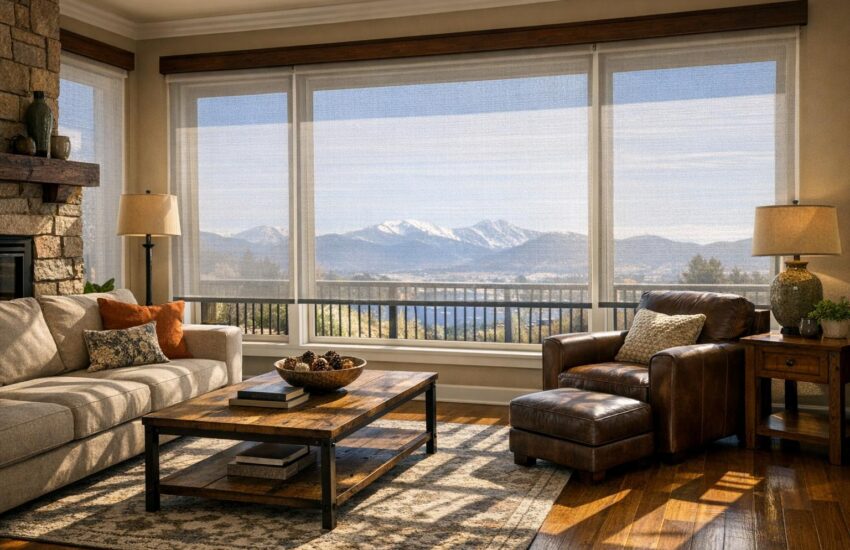
Keep the Colorado sunshine—lose the glare, fading, and harsh UV exposure
Colorado homes are famous for bright days and big views—especially along the Front Range. That same sunlight can quietly take a toll: accelerated fabric fading, dulled wood finishes, and annoying screen glare that makes rooms feel “too hot” even when the thermostat says otherwise. Custom solar shades are designed to filter light at the window, delivering UV protection and glare reduction while preserving your connection to the outdoors.
At Woven Window, we’ve helped Colorado homeowners and design professionals since 1999 choose solar shade fabrics that balance aesthetics, performance, and the way a space is actually used—morning coffee sun, afternoon heat, evening privacy, and everything in between.
Helpful starting point: if your goal is protecting interiors without losing your view, solar shades are often the “sweet spot” between sheer drapery and blackout solutions.
What solar shades actually do (and why they’re different from “regular” shades)
Solar shades are made from technical screen fabrics—typically a coated polyester or similar performance weave—engineered to manage sunlight. Instead of simply “blocking” light, they filter it. The fabric’s openness and color determine how much daylight you keep, how much glare is reduced, and how effectively your furnishings are shielded.
Key benefits homeowners notice quickly:
UV protection: Reduces UV exposure that contributes to fading and material breakdown.
Glare reduction: Makes TVs and monitors easier to use without darkening the whole room.
Thermal comfort: Helps cut down solar heat gain, especially on south- and west-facing glass.
Daylight + view: Maintains a “bright” feel—often the #1 reason people choose solar fabrics over heavier options.
Why rooms fade: it’s not just UV
Fading is best understood as a combination problem. UV radiation is a major contributor, but visible light and heat can also accelerate changes in dyes, wood stains, and finishes. That’s why a smart solar shade plan focuses on more than one variable—especially in bright Colorado homes with large panes and expansive exposures.
A helpful rule of thumb: Even when a window blocks most UVB, UVA can still pass through typical glass, which means interiors may still be exposed to “aging” UV unless you add a dedicated layer of protection (like a solar shade fabric designed for UV filtering).
Openness factor: the performance dial that changes everything
Solar shade fabrics are typically labeled with an openness factor—often 1%, 3%, 5%, or 10%. This represents how “open” the weave is. Lower numbers mean a tighter weave: more glare control and typically more UV blocking, with a slightly reduced view and a dimmer interior feel.
| Openness | Best for | Glare reduction | View + daylight |
|---|---|---|---|
| 1% | Harsh sun, west-facing rooms, media rooms, home offices | High | More filtered view; room feels calmer |
| 3% | Balanced everyday living; strong sun without “cave” vibes | Medium-high | Good view with noticeable comfort gain |
| 5% | Bright rooms where you still want glare control and UV defense | Medium | Brighter interior; clearer view |
| 10% | Spaces prioritizing view and daylight with light glare management | Low-medium | Maximum daylight and visibility |
Designer note: Fabric color matters too. Darker screen fabrics often provide a clearer daytime view outward, while lighter colors can feel brighter from inside. The “best” choice depends on window direction, interior finishes, and whether the room is used for screens, entertaining, or quiet work.
Room-by-room guidance for UV protection and glare reduction
Living rooms & great rooms
Prioritize comfort and longevity for upholstery, rugs, and wood finishes. If the room gets strong afternoon sun, a tighter openness (often 1–3%) can dramatically reduce glare without making the space feel closed off—especially when paired with thoughtful lighting.
Home offices
Screen glare is the productivity killer. Solar shades reduce contrast and hotspots so you’re not constantly adjusting blinds or shifting your desk. If you want a crisp view while keeping monitors usable, this is where fabric selection and placement matter most.
Kitchens & breakfast nooks
Sunlight plus heat plus daily activity can be tough on finishes. A solar fabric helps soften intense light and reduces the “baked” feeling at a sunny table—while still keeping the room cheerful.
Bedrooms
Solar shades are excellent for daytime light control and UV defense, but they’re not always the best stand-alone choice for darkness. Many homeowners pair solar shades with custom drapery for a layered look and improved sleep comfort.
Considering softness and texture as part of the plan? Explore our custom drapery options, or review fabric selection tips in best drapery and curtain fabrics.
A Colorado angle: bright days, big glass, and strong exposures
In Colorado, sunlight can feel more intense—especially in open floor plans with large west- or south-facing windows. Solar shades are a clean architectural solution for controlling brightness while keeping those mountain-sky views part of daily life. They’re also popular in newer builds and remodels where expansive glazing is a key design feature.
Installation matters: A solar shade performs best when it’s measured precisely and mounted correctly. If you’re investing in premium fabric, professional installation helps ensure smooth operation, consistent edge gaps, and a polished finish.
Learn more about our window treatment installation process.
Ready for solar shades tailored to your light, your view, and your interiors?
Get guidance on openness, color, and placement—plus professional measuring and installation across Colorado.
Prefer to learn about other shade styles? Browse custom window shades, including Roman shades and woven wood shades.
FAQ: Solar shades, UV protection, and glare reduction
Do solar shades really protect furniture from fading?
They can significantly slow fading by reducing UV exposure and cutting harsh daylight intensity. Because fading also relates to visible light and heat, the best results come from pairing the right openness and fabric color with smart placement (especially on south and west windows).
What openness factor should I choose: 1%, 3%, 5%, or 10%?
Start with how the room is used. If you battle afternoon glare, consider 1–3%. If you prioritize a brighter interior with a softer filter, 5–10% can work well. Window direction, nearby reflections (snow, pale hardscapes), and how close screens sit to the windows all influence the best pick.
Can I still see outside with solar shades down?
Yes—especially during the day. Tighter weaves (like 1%) reduce the view more than 5–10%, but many homeowners still find the outdoor visibility excellent, just with less glare and less harsh light.
Are solar shades good for privacy at night?
Solar shades are best thought of as daytime privacy and daytime performance. At night, with lights on indoors, silhouettes may be visible—especially with higher openness fabrics. If nighttime privacy is a priority, we often recommend layering with drapery, a privacy liner, or choosing a different shade style for specific rooms.
Do solar shades help with heat and energy efficiency?
They can. By reducing solar heat gain and moderating intense sun, many rooms feel more comfortable—especially on large exposures. Performance depends on openness, fabric properties, window type, and the side of the home receiving the sun.
Glossary: Terms you’ll hear when choosing solar shades
Openness factor: The percentage of the fabric that’s “open” (tiny gaps in the weave). Lower openness typically means stronger glare reduction and more UV filtering, with a slightly reduced view.
Glare: Harsh brightness and contrast caused by direct sun or reflected light that makes it difficult to comfortably see screens or relax in a room.
UV (ultraviolet) radiation: Invisible light that can contribute to fading and material breakdown. Many solar shade fabrics are designed specifically to reduce UV transmission.
Solar heat gain: Heat that enters a space due to sunlight coming through glazing. The right shade fabric can reduce how intense that heat feels in peak sun hours.
Want to learn more about Woven Window’s story and showroom experience in Denver? Visit our About Us page.
