
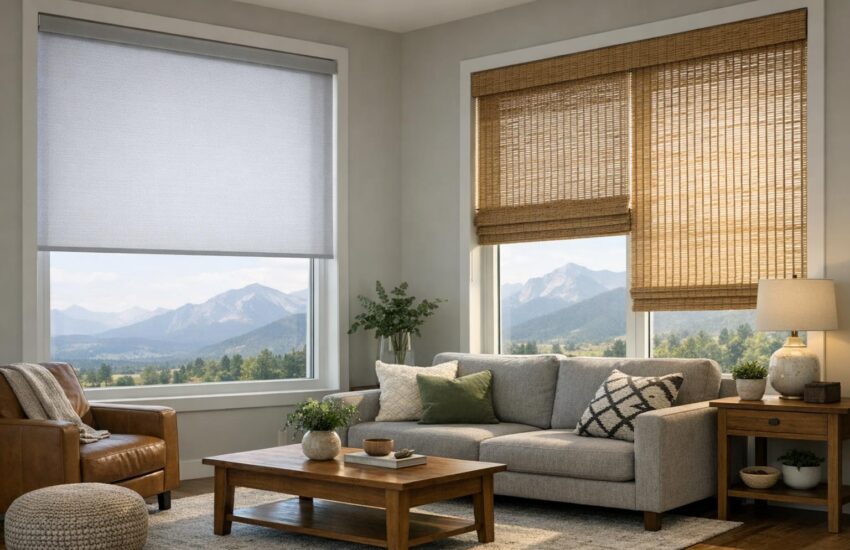
A cooler, calmer home—without sacrificing daylight
Colorado’s bright sun is part of the appeal of living here, but it can also mean harsh glare, hot “sun patches” on floors, and fading on upholstery and artwork. The right custom window treatments can make rooms feel noticeably more comfortable in summer while still keeping your spaces bright and welcoming. At Woven Window, we often recommend a smart pairing: solar shades for heat and glare control, plus woven wood shades for natural texture and layered style—especially when you want a softer, more design-forward look.
Why summer sun feels so intense indoors (and what shades can actually change)
When direct sun hits glass, the effects show up fast: squint-inducing glare, overheated seating areas, and UV exposure that quietly breaks down finishes and dyes over time. Window coverings help in a few different ways:
Glare control: diffuses or blocks direct rays so screens and countertops are easier to live with.
Heat reduction: limits solar heat gain so rooms feel less “baked” in the afternoon.
UV protection: reduces fading on hardwood floors, rugs, and upholstered pieces.
The key is choosing a product that matches the way you use the room—because the best shade for a west-facing family room isn’t always the best shade for a north-facing office.
Solar shades: the cleanest way to cut glare and protect interiors
Solar shades are built with performance fabrics designed to reduce glare and UV exposure while still keeping a soft view to the outside. What makes them especially practical for summer is how predictable they are: you can fine-tune how much light and heat comes through by selecting the right fabric and openness factor.
Openness factor (1%, 3%, 5%): the simplest way to choose performance
Openness factor describes how tightly the solar fabric is woven. Lower openness means a tighter weave—more glare control and more UV blocking, with a slightly more muted view.
| Openness | Best for | Glare + heat control | View + daylight |
|---|---|---|---|
| 1% | Intense sun exposure, strong privacy needs, bright rooms with screens | Highest | Most filtered view |
| 3% | Everyday living areas: balanced brightness, solid glare control | High | Good view + light |
| 5% | Rooms where you want a brighter feel and more outward visibility | Moderate to high | Brightest view |
Note: fabric color also matters. Darker solar fabrics often reduce glare more effectively while keeping a clearer view; lighter fabrics tend to brighten the room but may show silhouettes a bit more at night with interior lights on.
For many Colorado homes, solar shades are the “daily driver” for summer comfort—especially on windows that face strong afternoon sun. If you’re selecting shades specifically for heat reduction, the best results usually come from pairing the right openness factor with a precise, close-to-the-glass fit and professional installation.
Related service
Explore custom options and styles on our Solar Shades page.
Smooth operation matters
A precise fit is what makes shades perform and look tailored. Learn about our professional window treatment installations.
Woven wood shades: natural texture with flexible light control
Woven wood shades bring an organic, layered look—bamboo, grasses, reeds, and textured weaves that add dimension even when the shade is raised. They’re a favorite among homeowners and designers who want warmth and character, not a flat “techy” finish.
The liner decision: privacy, glare, and bedtime comfort
Woven woods can be installed unlined for a breezy, filtered-light feel—or upgraded with a liner for more privacy and stronger room darkening. If you love the look of woven wood but need better sleep or less nighttime visibility, a liner is often the upgrade that makes it feel “perfect,” not just pretty.
Design tip: woven woods also layer beautifully with side panels or custom drapery—adding softness while keeping the shade as the functional workhorse for daily sun control.
Interested in the style options? Visit our Woven Wood Shades page to see how natural textures can fit modern, transitional, and rustic Colorado interiors.
How to choose the right shade for each room (a practical, designer-friendly checklist)
Step 1: Identify your “problem window” direction
West- and southwest-facing windows often create the toughest summer conditions—late-day glare, overheated rooms, and uncomfortable seating areas. Start by listing which rooms feel hottest between mid-afternoon and sunset.
Step 2: Decide what you refuse to give up
Is it the view? The daylight? The privacy? Solar shades are excellent when you want daytime visibility with glare control. Woven woods shine when you want texture and softness—and you can add liners for privacy.
Step 3: Match performance to the room
Home office / media: lean toward lower openness solar fabrics for screen glare.
Kitchen / breakfast nook: prioritize easy cleaning and dependable light control.
Bedroom: consider liners or layered solutions for nighttime comfort.
Kitchen / breakfast nook: prioritize easy cleaning and dependable light control.
Bedroom: consider liners or layered solutions for nighttime comfort.
Step 4: Confirm measurements before you order
Small measurement differences can change how a shade operates and how much light sneaks around the edges. If you want a tailored look and consistent performance, professional measuring and installation make a noticeable difference.
If you’re balancing performance with a softer aesthetic, woven woods paired with a functional liner—or layered with drapery—can be the sweet spot. For fabric-forward design decisions, our guide to choosing drapery and curtain fabrics is a helpful next step.
Quick “Did you know?” summer comfort facts
Daytime glare can feel worse than heat. Even when a room’s temperature is fine, harsh sun angles can make screens and countertops uncomfortable.
UV is a major fading culprit. Floors, rugs, and upholstery can fade unevenly where sun hits most often—especially in bright Colorado rooms.
Layering is not just decorative. Pairing a performance shade with soft textiles can improve comfort, privacy, and the finished look of a room.
A Colorado angle: bright days, big views, and west-facing challenges
Across Colorado—especially along the Front Range—homes often feature larger windows to capture mountain light and views. That’s wonderful until late afternoon turns a living room into a glare zone. If you have west-facing glass (or large expanses of south-facing windows), solar shades can help tame the intensity while keeping the view. If your design style leans warm and natural, woven wood shades add a layered, Colorado-appropriate texture that still feels polished in modern interiors.
Where each option tends to shine locally
Solar shades: great for high-glare rooms, view windows, offices, and open-concept spaces where you want clean lines.
Woven wood shades: ideal for adding warmth and texture in living rooms, dining rooms, and bedrooms—especially when paired with a liner for privacy.
Woven wood shades: ideal for adding warmth and texture in living rooms, dining rooms, and bedrooms—especially when paired with a liner for privacy.
Ready to reduce heat and glare—without dimming your style?
Woven Window has served residential and commercial spaces across Colorado since 1999 with custom fabrication, expert design guidance, and professional installation. If you’re deciding between solar shades and woven wood shades (or planning a layered solution), we’ll help you choose the best fit for your windows, your light, and your daily routine.
FAQ: Solar shades, woven wood shades, and summer heat reduction
Do solar shades really reduce heat, or do they just cut glare?
They do both. Solar shade fabrics are designed to reduce glare and UV exposure, and many homeowners notice improved comfort in sun-exposed rooms—especially when the shade is properly fitted close to the window and matched to the right openness factor.
Which openness factor is best for west-facing windows in Colorado?
West-facing windows often benefit from tighter weaves (commonly 1%–3%) to handle late-day glare and heat. If your priority is a brighter view, 5% can work well—especially if the window doesn’t get direct blasting sun for long periods.
Are woven wood shades private at night?
Many woven woods filter light beautifully during the day, but nighttime privacy depends on the weave and lighting. If you want strong privacy after dark, adding a liner (light-filtering or room-darkening) is typically the best solution.
Can I layer solar shades and woven wood shades on the same window?
In many homes, yes—layering can look intentional and solve multiple needs (daytime glare control plus warmth and texture). The details depend on your window depth, trim, and how you want the shades to operate, so it’s worth reviewing the window in person.
Do custom shades help with energy efficiency?
Window coverings can improve comfort and reduce unwanted heat gain in summer. If your primary goal is insulation performance year-round, certain insulating shade styles (like cellular/honeycomb shades) may be worth considering as part of an overall plan.
Glossary
Openness factor
A percentage that describes how tightly a solar shade fabric is woven. Lower numbers mean a tighter weave (more glare/UV control); higher numbers mean a more open weave (more light and view).
Liner (woven wood shades)
A fabric backing added behind a woven wood shade to increase privacy and improve light control. Liners can range from light-filtering to room-darkening.
Heat reduction (in window treatments)
A practical goal of limiting how much solar energy and radiant heat enter through windows—improving comfort and reducing hot spots during sunny seasons.
